
Sugar Glider Myth Busters
by Lisa
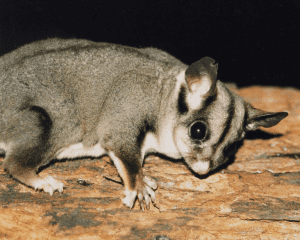 It has always been our intention to do our part as best as we can in helping raise standards in the breeding / selling industry, where exotic pets are concerned. We are sharing this information in an effort to help ensure people interested in bringing exotic pets into their homes understand that different organizations have different viewpoints on how sugar glider husbandry should be practiced.
For those new to sugar gliders, our advice is to find a breeder you really resonate with – someone who will support you long after you bring your new fuzzy buddies home. In other words, feel really good about whom you choose to do business with. Most people who bring sugar gliders into their homes are doing so for the very first time, and it is important to know you will be well supported throughout the lifetime you share with your new family members.
If you are told something by a sugar glider seller that doesn’t feel right, sounds too good to be true or creates any kind of skeptical feeling, trust your instincts. Take your time and do your homework – you should never should feel pressured into making an immediate decision. You can research our opinion on lots of glider questions by reviewing topic categories or searching past newsletters here.
I’ve compiled this list in no particular order, but everything included is important. Fact is, the better you are trained in good husbandry, the better your chances are of having a great sugar glider experience for a long time. I hope this information serves you well in accomplishing that goal. Some of these topics have been discussed in past newsletters, but I thought it would be helpful to review them together within a “Myth Busting” framework. So let’s begin!
“Sugar Gliders Do Not Need Veterinary Visits”
I am starting here because we just covered this topic last month. While it is true that sugar gliders do not need any shots or vaccines (none even exist for sugar gliders), this does not excuse us from being responsible to the fur-laden buddies we’ve chosen as our family members. I have little doubt that if our dogs did not need to get annual licenses and vaccinations, many people would not bother to take their dogs in for annual visits. This is not the type of person we hope to attract as keepers of my grandgliders! There are those of us who want to do the best we can for our fuzzy wards, and then there are those of us who try and avoid / delay our responsibility to our pets. Remember, they are family members with needs too.
It is very important, in my humble opinion, that sugar gliders get annual wellness visits. The vets that treat sugar gliders are hard to come by and most have limited experience because they only see the sugar gliders once the glider has become ill. Veterinarians can be much more effective in their job if we give them the opportunity to get to know our pets while they are well, not once they are so far gone that it is harder, or sometimes impossible, to save them.
We take our dogs and our cats to the vet. Sugar gliders have just as long of a life span and are a rather large up front investment. Why is it that some feel it is OK to ignore the most basic wellness activity? To me, it is like never taking your child to a pediatrician. Yes, admittedly, my animals are like my children to me.
“Dogs and Cats will not Bother your Gliders because they are Not Rodents, they Don’t Smell Like Rodents”
Let me address this myth with a question. Have you ever had a dog or a cat that brought home a lizard? A frog? A bird? A snake? OK, that was four questions, but I hope you see my point. Dogs and cats do not go after small animals because of smell. Dogs and cats go after small animals because they move.
Here is a personal experience I have with my youngest dog, Breesy. Breesy is some sort of shepherd / hound mix and you’d think the hound part would have her tracking animals all over the place, but she’s not interested in much of that. She is not interested in dog toys either (unless it’s a kong filled with peanut butter). Rather, her favorite toy is a red laser light made for cats. Light has no smell, but it does have movement (especially when Mama makes it move really fast and up the walls!)
So, does your sugar glider move? Sometimes move quickly, and in an erratic way? Will that movement attract the attention of your cats and dogs? You bet. Whether your pet attacks the gliders or not depends on their personality and rearing, but hear this – sugar gliders have been attacked quite often by both dogs and cats. And this has nothing to do with smelling like rodents – or not smelling like them.
“Only Buy Gliders from USDA Certified Breeders or Companies”
We discussed this issue in the past as well. There is a law called theHobby Rule which means in order to even apply for a USDA license you have to have four or more breeding female sugar gliders, otherwise you are not even eligible for a USDA license.
There are some very small, excellent breeders out there. And there are also some very large, not-so-great, USDA licensed breeders out there too. We all know people with driver’s licenses who are, quite frankly, horrific drivers. Being eligible for – and receiving – a driver’s license exam does not mean you are a good driver. Likewise, a USDA license is not a guarantee of quality; rather, it means minimal standards have been met. For example, SunCoast is USDA licensed, but we are also licensed by the State of Florida, which has much stricter requirements than the USDA.
While I believe large breeders should be licensed, it does not mean they have passed some rigorous measures. To me, having a USDA license is similar to having a GED. In the field of animal husbandry, a really good breeder (regardless of size) wants not only a high school diploma, but also a masters and doctorate (figuratively speaking). The best breeders are continually studying, learning, and doing things to continually improve breeding practices.
“Sugar Gliders are Great Pets for Kids”
Sugar gliders are great family pets, but I strongly believe adult involvement is important. I see gliders primarily as adult pets. Sugar gliders can interact beautifully with children when supervised by an adult, but when I hear that someone adopted a sugar glider as a child’s pet, it shivers ‘me timbers.
Giving a sugar glider to a young child is like giving a parrot to a young child. The very young do not have the discipline to bond with such an animal. Older kids and teenagers may certainly be responsible enough, but when you have an animal with a long life span, assuming Mom and / or Dad are not involved, what tends to happen is the sugar gliders are given away once that young person becomes too busy for the responsibility.
I am an advocate of only bringing pets into the home if you sincerely believe you can keep them for the entire lifetime. Pets are not disposable items and deserve better than that. We wouldn’t give away one of our children because they became inconvenient, right? OK, here I go again, my pets are my kids!
“It is OK to Keep Sugar Gliders as Single Pets”
Sugar gliders are colony animals. I think that different entities sell them as single pets for one of two reasons. First, they are ignorant of the fact that sugar gliders are so extremely social and made by Nature to live amongst their own kind. Second, the seller may just be arrogant, thinking they can “modify nature”. I know some pretty smart people, but none come close to the pure genius of Nature.
Keeping exotic animals is a privilege we have, not a right. If we wish to exercise the privilege, we should do so in a way that honors the animal. People do not have the right to turn sugar gliders into something they are not – they need companions of their own kind.
Sellers who do this may also make comments such as, “they will not bond if you get more than one”, which has not been true in my experience. One glider might be OK if you spent enough time with it, but that required amount of time is completely unrealistic. We can’t snuggle them in their sleep as they do each other, we can’t groom them as they do each other and we are not likely to stay up all night and play with them as they do each other. Even with our best intentions, we simply cannot meet all the touch and contact needs that sugar gliders give one another.
“Shipping Sugar Gliders is Stressful and Can Kill Them”
I find this claim particularly interesting as I’ve been shipping sugar gliders since 1999 and have never had a single incident detrimental to the health of our sugar babies. If I thought this was even remotely true, I would not do it. I simply love them too much.
Also, when you encounter glider companies that sell in malls or flea markets or trade shows, guess what? They all have their gliders shipped to them. And some of these people are the very ones advising to never have a glider shipped.
The reality is that animal shipments have more regulations on them than we people have when flying on commercial aircraft! ‘Tis true. Animals are not only regulated by FAA regulations, but also USDA and IATA. If an airline did a poor job in handling animals, they would not be allowed to ship animals any more.
Sugar gliders are particularly easy to ship because they are nocturnal and it is our goal to ship our babies during the day, while they are asleep. We also use kennels that are not easy to see into. The sugar gliders are in a sleeping pouch, so even if someone can peek in on them, they are likely going to be in the pouch, so not visible.
I’ve had many customers over the years take long drives, as long as from Rhode Island to Florida because they did not want their gliders shipped. Those who picked up gliders and took them home on long road trips reported back more stress related issues than the gliders that are flown. Experience is a great way to bust a myth!
“Young Sugar Gliders Should be Kept in a ‘Starter Cage’,
Buy the Correct Size Cage when they Grow Up”
Huh? This one tickles me. How do such ideas get started? Probably to sell small cages that need to be upgraded right away.
The folks who talk about starter cages often say young gliders “can’t navigate a large space” or “will bond more quickly in a small cage”. This is pure horse puckey, as many current glider owners will tell you.
I have some customers that have built floor-to-ceiling, humongous cages as the first home for their new babies, and I’ve never heard anyone EVER complain that they think they started the gliders off in a cage that was too big. All gliders, no matter what age, love to climb, jump, and explore – that is their nature. Plus, every time you change out their habitat, you are creating a new stress for the animals that can result in undesirable behavior, not to mention wasting money. Minimum size housing should be at least three feet high and about the same or a bit smaller width. But bigger is better and taller better than wider, because Gliders like to climb up high (like in a tree).
The size of the cage will not impact the bonding process. Too many years of experience has convinced me of the truth of this statement. The best time to bond with them is during the day, and they will likely be in their sleeping pouch. If they are sleeping in something else, take that something else out of the cage until they form a perfect habit of using their sleeping pouch. Then, simply remove the sleeping pouch with the suggie babies in it, and let the bonding begin!
Nothing about bonding has anything to do with the size of the cage.
“If You Feed Your Sugar Gliders Bugs, they Will Stink”
Sugar gliders are generally classified as omnivores, more specifically insectivores. I’ve also heard them classified as preferential insectivore. Sugar gliders from most regions of the world prefer insects as their primary source of nutrition. So we won’t feed them bugs or other acceptable proteins because they will allegedly stink?
Fact is that we need to feed our pets in accordance with their nutritional balance needs. Protein is important for all sugar gliders and should be higher for the young and should be yet higher for the breeding animals. Non-breeding mature animals likely require less protein, but require protein nonetheless. Proteins are the building blocks of the body. Carbohydrates are the fuel or the energy of the body. Sugar gliders require both.
Another fact is that female sugar gliders and neutered males do not have much odor (but they do have some, like all living things). You do not change the food offerings to avoid smell. To avoid smell, keep the cage and accessories clean, using products that are animal safe. Intact males smell, whether you feed them bugs or not! For intact males, keep the area well ventilated and clean, and expect that you will still have some odor, regardless of diet. Most of the smells in animal habitats are not necessarily of the animals themselves, but from bacteria. Control the bacteria, control the smell.
“Buy Food in Bulk and Save Money!”
Fact: Pelleted staple foods can only claim a six month shelf life if using natural preservatives and a twelve month shelf life if using chemical preservatives. Now the shelf life starts at point of manufacture, so if you are buying bulk food, time has elapsed since it’s been made, delivered, warehoused, and then sold to you. Our food products use natural preservatives, because this is what we prefer to use. We also get food shipments in monthly, so we are always refreshing our staple food products.
I once did an informal six-month experiment with fresh pellets that had just arrived to our warehouse. Setting aside enough food for six months, I literally counted out pellets distributed to each cage each day; the following day, I counted what was left, including those that were discarded to the pan underneath the cage. The results were clear: the sugar gliders preferred the food fresh! Even though the group that received the older food still received food well within the time limits of expiration date, they still didn’t like it quite as much.
With some food products, it makes sense to stock up and buy bulk to save money, but it doesn’t make good sense with all food products. Suggies will just use the food as baseballs if it’s not fresh, which is wasteful. With pellet foods, you will get better food value for your money if you buy only what you will use while the food is fresh. And if you are buying more than a six month supply, this means you are either loading your sugar gliders up with chemical preservatives, or feeding food way past its expiration date. Yuck!
Til next time – in good health for you and your gliders, we sign off in appreciation of all of you who share great glider adventures with us!