
The Emergency Vet Fund (EVF)
By Tom Havens, Administrator of EVF
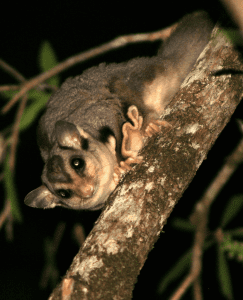
I don’t know exactly when the EVF actually started. I don’t think anyone does. Several glider lovers got together to help gliders and their owners many years ago. Mostly they helped anonymously, not asking for anything in return but wanting to help in anyway they could. The EVF website was created about a year and a half ago because of the growth in the glider community and increased responsibilities. The EVF really should change its name; providing funds for sick and injured gliders is a small fraction of what it does. Typically, we handle several requests for help every day and several emergency calls every week. The EVF tries to keep a staff of very wonderful and dedicated glider veterans available to answer the emails and calls for help.
The response to the EVF has been simply overwhelming. I intentionally have not submitted the GliderHealth website to Internet search engines yet; people seem to have no trouble in finding it. I thought it would just be a trial site for a year or two and see if the community would support the site by using it. The following article will explain the purpose and inner workings of the EVF, which have not really been explained in detail before.
Purpose
Enhance glider knowledge
This is the main purpose of the EVF. We work not only to teach glider owners about the health and care of these little creatures but do everything we can to teach Veterinarians as well. We want to be able to fund some studies later.
Provide health counsel
This keeps us very busy. We offer both casual and emergency non-Veterinarian advise to glider owners by phone or e-mail.
Financial Support
Limited funding support is available to qualified glider owners for emergency vet expenses.
One of the fundraising projects held each year by the EVF is a calendar contest. Photos are submitted by glider lovers everywhere and the best of the best are chosen by the glider community and printed into a twelve month calendar. Unfortunately at the time SunCoast released this newsletter the calendar was just not quite ready to ship out, but if you want to be among the first to get a copy of the new 2003 calendar, send your request here: [email protected]. As soon as the calendar is available, we will personally e-mail each of you with the full scoop on how you can get your glider calendar and help out the EVF at the same time! Or if you just wish to make a pledge to the EVF, you can do so by mailing a donation. Please make checks out to EVF Fund C/O Tom Havens. Send to the following address:
Tom Havens
114 Alton Lynch Circle
Madison, AL 35757
EVF and SunCoast Sugar Gliders are not directly affiliated. If you wish to contact the EVF, contact me Tom Havens at [email protected]. If you contact SunCoast Sugar Gliders about EVF business, they will simply forward your email to me.
Organization
Positions
Administrative
Currently, I am the administrator of the EVF. I receive most of the requests for help and funding then forward it to the proper place. I also take care of the GliderHealth website and funds. I do not approve any funding requests. I only assign them a case number then forward the request to the Voting Committee.
Voting Committee
The voting committee is made up of a Committee President and an additional panel of voting members. The number of voting members can number from five to nine. Any voting member and myself can
recommend anyone to become a member. The Voting Committee President has the final decision.
All of the Voting Committee is anonymous. Only they and myself know who all of them are. The reason for the anonymity is to prevent repercussion from a glider owner whose case was not favorably voted on. Unfortunately, the EVF just doesn’t have the funds to approve everyone. The Voting Committee has an awesome responsibility that can be a matter of life and death for a glider so they don’t take their duties lightly.
Health Experts
The health experts are a group of highly experienced glider people. They have been invited to join the EVF group as consultants to glider owners seeking advice. Some of them even allow 24/7 phone calls. Talk about community dedication! Are you interested in becoming an EVF Consultant? Qualifications are simple. You must have years of glider experience, be able to communicate effectively, have high availability, deal with panicky people, have a good idea who the particular experts in the glider community are (so you can tap them for information), expect no wages, no thanks, occasional high anxiety, and be invited. If you think you qualify, e-mail me. Your name and qualifications will be considered by the Committee.
Services
The EVF provides glider owner counsel, Veterinarian counsel, and limited financial help. If your Vet needs some help, contact us and we will either directly talk to you Vet or attempt to get another Vet to talk to him or her. A request for funding help can be submitted through the GliderHealth website: http://www.gliderhealth.com. If you are approved, the funds will be paid directly to your Vet. All requests are thoroughly investigated before approval. This includes a call to your Vet to get the medical history of your glider. I know this sounds harsh but it is the only way we know of to stop false claims.
Accountability
Usually, all of our collections and expenditures are available for public viewing but right now it is undergoing some changes. We are replacing all names with case numbers. So, in the future you won’t know the actual names of fund recipients. This is being done to protect their privacy.
Fund Raising
We mostly rely on private donations with occasional fundraisers like this year’s Christmas cage. We are also getting some support by a few glider web entrepreneurs. I will make a special page on my site to honor them. If you would like to donate, go to our website for more information: http://www.gliderhealth.com
Volunteers
If you think you would like to help the EVF as a volunteer for fund raising, glider health counseling, or in some other way, please e-mail me here: [email protected]
Goals
Steady funds
Our largest obstacle to provide more services is money. We would like to find sources for steady funding.
Health studies
We have some studies that we would like to fund. Some of these studies can be done reasonably (around $5000.00) and would be a huge benefit to our Glider Community.
Healthy Gliders
Ultimately this is our goal. By educating owners and Vets and funding some studies, perhaps we can make a difference.
Contact: [email protected]
To Give a Glider … or Not to Give a Glider
By Arnold (with a little help from Lisa)
To give or not to give…that is the question! I ask thee this … Would thee like thine fuzzy butt stuffed into a box with a big bow on top? Thee says NOT!
Arnold … Lisa here … whatsup with all the fancy talk? Did you run off to charm school when I wasn’t lookin?
Yes, me fine lady … Since meself is so famous now, methinks me should refine me mannerisms and me vocabulary-isms … Yuk yuk yuk … Me tore a page from that book you call Shakespeare, and after I chewed on it for awhile and digested the content I thought now this is a fine place to potty … hehehehe. So me studies had to end cause the book is no more.
Oh Arnold … how could you?
Hmmm … it was an easy choice … the only other book you had out was “Glide with The Wind” … And ya know I’d never ruin anything about Rhett Bugeater and Scarlett O’Flyer … they are my heros!
Shhhhh, Arnold, here comes Debbie! We better get to work before she shows up … you know she’s always so serious!
Now back to the question, to give or not to give! As you can imagine, lots and lots of people consider giving pets as a holiday gift and so we’ve put these folks into a few different categories and hope you will consider these thoughts when making your holiday decisions.
The first group of folks are those who make a decision as a family. Everyone has been involved in researching gliders as pets and just happen to choose this time of year to make the special addition to their family. We think you guys rock! Animal friends should never be brought into a household that’s not fully prepared and fully informed to make life the best as possible for the new critters. Ya see us little guys depend on you humans completely for everything, so if you’re not prepared for the task, then maybe you should get yourself one of those whatchacallit plush toys … they looks like animals, but they are just pretend.
The next group of folks are those who knows someone who’s really really done lots of homework on sugar gliders but have not actually had the opportunity to be blessed with any yet. Now while this can be very thoughtful to get someone a sugar glider friend for the holidays, I wants to warn you that if we comes as a surprise, well the person you are surprising might not be completely fully prepared and committed to doing us right. Or while you might think that this person is really prepared cause ya know that they’ve done the research, how do ya know fer sure that they know enough?
Any good breeder will want to interview the actual person who’s gonna be in charge to make sure that the intended glider human is really really educated just right for the experience. And there’s some things that you might not think of. For instance, each breeder may have a different sort of diet plan and it’s really a good idea for new sugar gliders to be offered the same diet plan when coming to a new home ’cause rapid diet changes can make them get the scooters … I think you call it die-er-rear … and I call it bad sticky number twosies.
Either way its not fun at all for us suggies and if bad enough we could get real sick. So if you think this is a great idea, I do indeed hopes you will reconsider. Perhaps instead you could get the setup stuff for a good glider home (like one of my starter kits) and put a big shiny picture of a sugar glider in the habitat with a cool card that says … OK, so now that thee got the good glider home, now go thee forward and find thee some good gliders. Wouldn’t that be a great surprise?
Now to group three … I think this group should be stuffed in a box with a big bow on top. This group calls me and Lisa and says I want to get a sugar glider for my aunt, or my friend, or my little brother or whatever. And we says, do they know a lot about gliders? And they says, I don’t even know if they ever even heard of one, but I think they will like it. IT … is that what me friends are reduced to … ITS????? … Hmmmph … This is just a terrible rotten idea. It’s not fair to me fine furry friends to be put in that position. Here’s how I see it. If the big fat holiday man wanted sugar gliders to be given to unsuspecting humans, he would have never ever ever invented Chia Pets! Got it?
And last but not least, there’s the group that wants to get sugar gliders for their young children. Now if the suggies are intended to be for the whole family and the mommy and/or daddy are going to be the primary responsible peoples, then maybe this could be OK … But if the short two leggers are the ones in charge of our lives and our comfort, this is another not so very good at all idea. We suggies needs the right sort of care or we could get very sick, or very sad, or (ooooohhh, I shudder) very dead! And this should bring us full circle back to me first idea of giving one of those whatyacallit plush toys.
So now before I glide off into the moonlight, let me just reminds you that this is a crazy and hectic time of year … If your home has lots of commotions, then you might want to wait until right after the holidays to get new suggies and you might also want to be considerate of your present suggies. If things are noisy and crazy during the day, it might be hard for us to get our beauty rest. And if you have suggies with joeys in the pouch or just coming out of the pouch, a big change in household activities and smells and stuff could cause stresses at a time when new mommies just don’t need it.
So deep from me heart of hearts, I wishes everyone a happy and safe holiday time. May your food servings be abundant, your sleeping place warm, and may you be surrounded by lots of the ones you love and cherish. Happy Holiday Glidin!
I remain, Yours truly … Arnold!
Exotic Pet Vet
What Dr. C Says On… Breeding Sugar Gliders, Part Two
By Dr. C., of course! And with a little help from Debbie this time…
If you missed Part One of the article on breeding sugar gliders, click here to review. This month continues in the question and answer format, so let’s jump right in:
Q: Is it preferable to use a nest box or sleeping pouch?
A: From our experience and observations, it seems that the gliders prefer the pouches as their favorite place to sleep, as it’s accepted convention that the pouches should be located up high in the cage. However, we prefer to use nest boxes for our breeding gliders. We make our own boxes out of 5×7 inch Rubbermaid index card boxes. We drill a two inch hole in the top and a two inch hole in the side. We use this style over wood because the plastic is easy to clean. Wood nest boxes hold a lot of smell and bacteria and are not really suitable for sugar gliders. The plastic boxes we make come in black, so it provides lots of privacy for resting gliders and if the holes are properly positioned, babies are not likely to fall out of the nesting space.
Q: Should the nest box or sleeping pouch be in a particular place?
A: Another discovery we’ve made is that when joeys are just about ready to come out of the pouch and while OOP joeys are very young, we have chosen to place the nest box very low to the bottom of the cage. We have talked to countless numbers of people who have lost their first set of joeys or repeatedly lose joeys. Our theory is that the joeys get out of the nest pouch or box and either fall to the bottom of the cage injuring themselves or fall to the bottom and are unable to get back to the nest place on their own. If neither of the parent gliders are aware of this, the young joey will get cold quickly and die.
Q: Why do joeys get cold so fast? Our glider room is very warm.
A: Young joeys apparently are unable to regulate their own body temperature. They rely on the body heat of the parents to keep them warm and viable. We also theorize that once the joey’s body temperature goes below a certain level, the joey loses much of its scent. Since sugar gliders seem to use their sense of smell for identification purposes, the parent gliders may no longer recognize the joey as its own, thus leading to abandonment. We’ve had several occasions of joeys found outside of the nesting place and once the joeys were warmed back to normal temperature, the parents accepted the joeys back into the nest.
Q: What if the parents do not accept the joey back into the nest?
A: This is a topic of discussion that will take up a whole article by itself. But for the sake of a general answer, let it suffice to say that hand feeding a young joey is a long and difficult process. And the odds of actually saving the joey are very slim. We’ve saved one joey that was only one day out of pouch. We feel very fortunate that we were able to save one so young. Joeys anywhere from 1-3 weeks out of pouch are still difficult to save. We only have about a 50% success rate saving such joeys, and they often end up undersized as adults. This is done under vet supervision and with the help of some of the top glider-experienced lay people in the country. It’s not a task for the faint of heart.
Q: What about nesting material?
A: If using a nest box, gliders love nesting material. We’ve heard of many people using soft cotton balls, such as the type sold for hamster nesting. We choose multiple strips of fleece material. We simply put the fleece strips in the cage, and let the gliders bring them to the nest box and arrange in a manner of their choosing.
Q: Should the male be left in with the female(s) once breeding has taken place?
A: Absolutely yes. Male sugar gliders play a vital role in child rearing and assist the female greatly in caring for the young. Often the female will leave the babies in the nest under the male’s care while she feeds and stretches her legs a bit. The males will often help keep the babies warm and it’s not at all unusual to see the babies hitchhike on the male’s back. Male gliders also help keep the babies clean.
Q: My female glider is overweight and doesn’t seem to breed at all. Is there a connection?
A: We’ve found that overweight females often will not breed or might breed, but won’t bring the joeys to term. It seems to be a much more critical issue for the females than the males.
Go to: Part One Part Three Part Four
Tune back in next month for the answers to a whole new series of breeding questions. In the meantime, if you have specific breeding questions, send them by clicking here and I will do my best to include them in the next edition of the GliderVet Newsletter.
I send my wishes for good health to both you and your sugar gliders. I’ll see you again next month!
Dr. C. … and thanks Deb!
Dr. Janine M. Cianciolo